




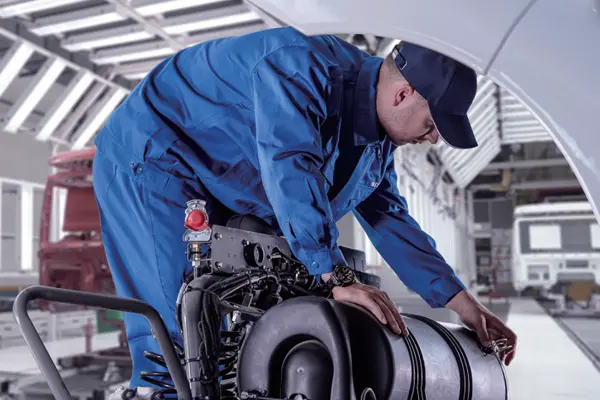
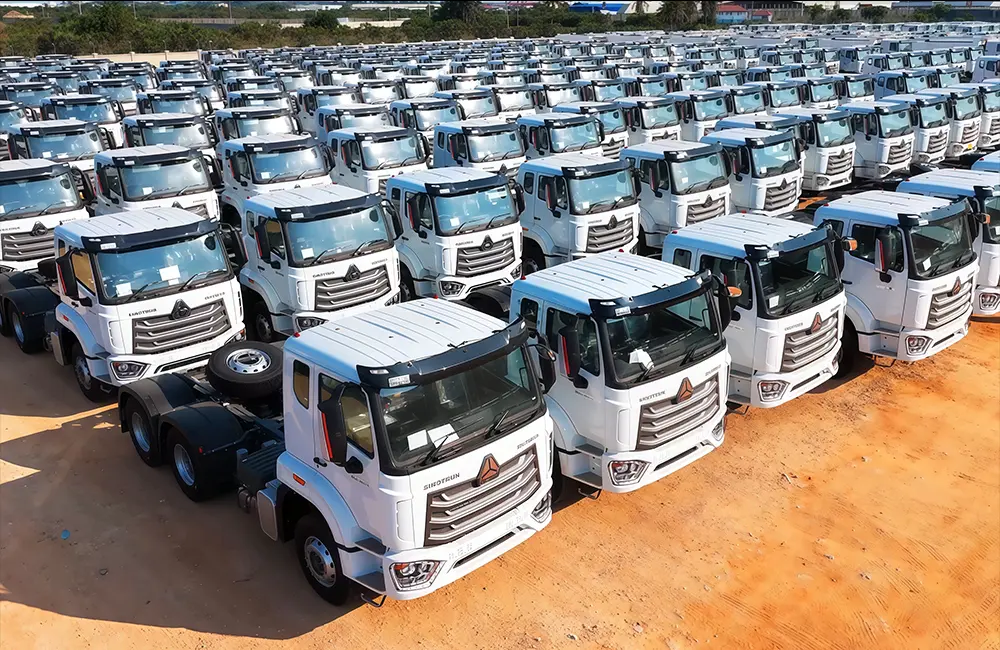
© Sinotruk Howo Truck


en

Shandong, the only province in China with all 41 major industrial categories, boasts a powerful state-owned enterprise force capable of shouldering significant responsibilities. As of the end of September 2025, its provincial-level state-owned enterprises ranked first nationwide in total assets and operating revenue, and second in total profits and net profits.
In May 2024, General Secretary Xi Jinping visited Shandong, entrusting it with the new mission of “leading the way and taking on major responsibilities.” This land, once known for its “elephant economy,” is now, led by state-owned enterprises and with coordinated efforts from the government and enterprises, forging a distinctive path in exploring the transformation of traditional industries and the restructuring of the government-market relationship.

Sinotruk Newspaper-shandong
01 Why dare to “spend ten years honing a sword” and “not make money for eight years”?
In today’s increasingly fierce global technological competition, the “cold bench” of scientific research is more arduous than ever before, requiring more people who can persevere. When short-term returns become the general pursuit of the market, a real problem arises: who will “bet the future” on those high-risk, long-cycle key technology breakthroughs?
In Shandong, the research team discovered a special “national team”—capable of withstanding “strategic losses,” focusing on long-term R&D, and daring to exchange sustained investment for key breakthroughs.
Weichai Power Co., Ltd. is an outstanding representative of this team. In September 2024, at the Hanover Motor Show in Germany, the China National Heavy Duty Truck Group’s Yellow River hydrogen internal combustion engine traction train made a stunning debut. This train is equipped with Weichai’s independently developed 15-liter direct-injection hydrogen internal combustion engine, boasting a power output of up to 560 horsepower. It is compatible with various clean fuels such as methanol and natural gas, becoming a new benchmark for China’s independent power technology to reach world-leading levels.
“The development of the methanol engine, from project initiation to trial operation, took us a full eight years. We didn’t make a single penny of profit during those eight years, but it gave us control over our development for the next 10 years,” Wang Huajie, Minister of Strategic Planning at Weichai Power, told the research team, explaining the value of this cross-cycle investment.

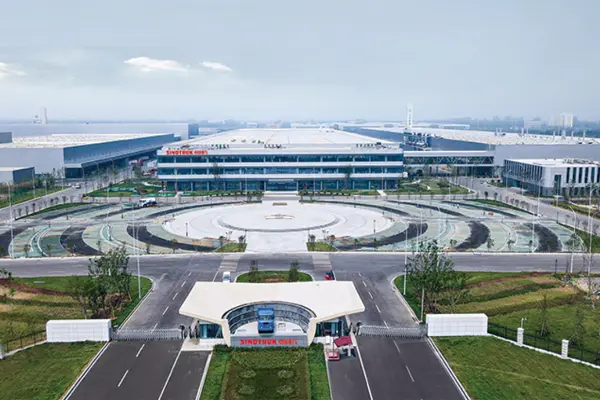
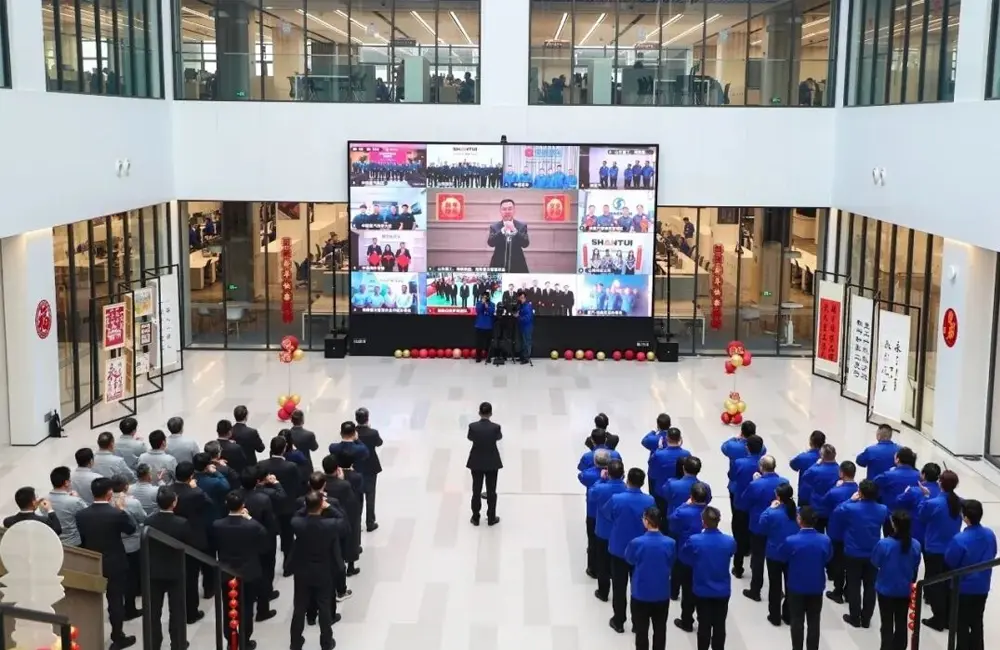
Sinotruk Office Building
“Even earlier, after more than 10 years of dedicated research, Weichai improved the thermal efficiency of diesel engines to 53.09%, setting a world record four times in four years,” said Li Zhijie, Assistant General Manager and Vice President of the Central Research Institute of Weichai Power.
The same commitment to innovation is also playing out in other fields. In high-end manufacturing, China National Heavy Duty Truck Group (CNHTC) has invested 14 billion yuan in R&D, leading the establishment of a “R&D consortium” that unites nearly 100 companies to achieve continuous breakthroughs. “While the market fluctuates, R&D cannot stop. The responsibility of state-owned enterprises is to provide certainty amidst uncertainty,” said Jiang Pengpeng, Deputy Secretary of the Party Committee of CNHTC, with resounding conviction.
These companies’ practices collectively paint a picture of innovation among Shandong’s state-owned enterprises: some are tackling computing power and large-scale models in the “sky,” some are exploring mines and energy on the “earth,” and some are venturing into hydrogen energy and shipping equipment at sea. As Man Shengang, then Party Secretary and Director of the Shandong Provincial State-owned Assets Supervision and Administration Commission, stated, “Few people can create world-class technology in two or three years, but state-owned enterprises must have people who can dedicate themselves to it for ten years straight.”

Sinotruk Production Workshop
Such strategic resolve requires solid institutional guarantees as support.
At the beginning of this year, Inspur Group Co., Ltd. pioneered the “R&D reserve fund system,” planning to allocate 20% of its annual net profit to establish a dedicated R&D fund pool to centrally support major technological breakthroughs. “We’d rather earn less than let innovation stop,” said Wei Lei, Deputy Director of the Science and Technology Innovation Department of Inspur Group.
Inspur’s confidence stems from Shandong’s clear performance evaluation guidelines. In 2024, the weight of technological innovation in the performance evaluation of Shandong provincial state-owned enterprises increased from 12.5% to 33%. Simultaneously, the cultivation of strategic emerging enterprises and technology-based enterprises was incorporated into the evaluation content, guiding enterprises to increase investment in strategic emerging industries.
The core of this system lies in reshaping the logic of enterprise development. “We require enterprises to consider not only economic benefits, but also strategic and future-oriented benefits,” said Dong Xiaobo, Director of the Performance Evaluation and Distribution Department of the Shandong Provincial State-owned Assets Supervision and Administration Commission (SASAC). “State-owned enterprises must have the confidence and vision to withstand losses for several years and not be afraid of falling behind.”

Sinotruk Truck Series
Besides the performance evaluation mechanism, there are also policies that provide substantial financial support for enterprise innovation. In recent years, the Shandong Provincial SASAC has continuously increased its policy support for tackling key core technologies. Based on the principle of “treating R&D expenses as profits,” it adds back national and provincial key R&D projects at a rate of 2 times and 1.5 times respectively. In 2024 alone, the total amount added back by provincial state-owned enterprises reached 42.8 billion yuan, continuously enhancing enterprises’ enthusiasm for innovation.
“Treating R&D investment as profits has provided us with significant support,” said Sui Jiancai, Deputy General Manager and Chief Engineer of Shandong Energy Group Science and Technology Development Company (Technology Research Institute). “Since the ‘14th Five-Year Plan,’ its R&D investment has achieved an average annual compound growth rate of 25%.”
The value of long-termism ultimately needs to be realized through a closed-loop return mechanism.
“Do researchers earn more, or do company management earn more?” Faced with this question, Zhang Zhengqiang, Director of Corporate Culture at Weichai Group, answered without hesitation: “Results determine success. Teams that achieve results earn more than management.”
This incentive mechanism has been in place at Weichai for over 20 years. Since 1998, Weichai has held a science and technology innovation incentive conference every two years, awarding nearly 100 million yuan in prizes to those who have made significant contributions to scientific and technological achievements in the last three conferences, with the highest individual award reaching 10 million yuan. In 2019, Zhang Jiyuan, the former academic leader of the National Key Laboratory for Internal Combustion Engine Reliability at Weichai Power, received this substantial award.
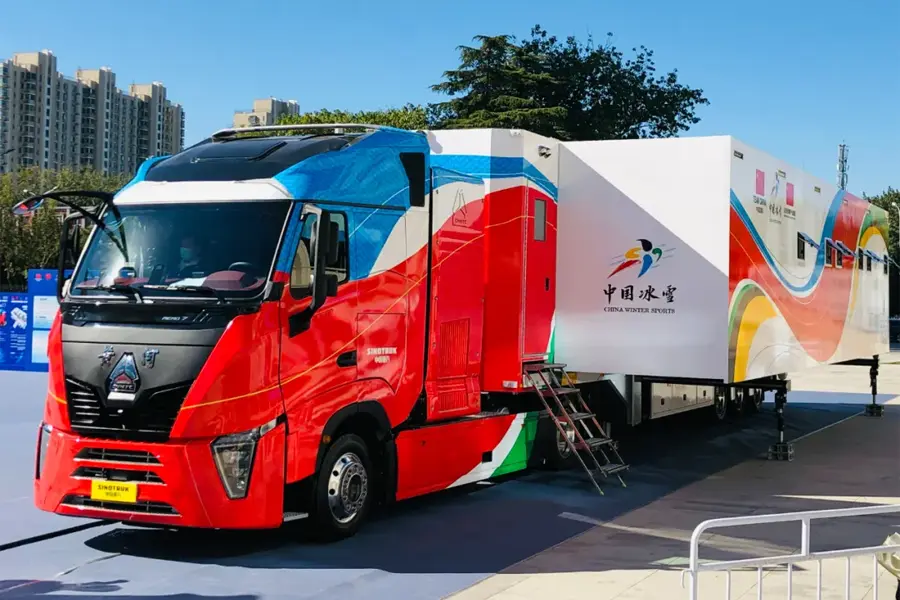
Sinotruk Yellow River X7 Snow Wax Truck
Other companies also have their own incentive mechanisms—Inspur Group has established a professional team of technical managers, stipulating that those who make significant contributions to scientific and technological achievements will receive certain rewards and compensation; Shandong Expressway Group has established four technology transfer companies to promote the industrialization of technology; Shandong Energy Group has implemented a “decentralization and deregulation + medium- and long-term incentive” reform, exploring mechanisms such as equity incentives… From the “returns on research” of individual projects to the systematic “innovation benefits,” the long-termism of Shandong state-owned enterprises is forming a positive cycle. Innovation is no longer merely a cost, but has become an intrinsic driving force for the sustainable growth of enterprises.
As Wang Minghua, Director of the Science and Technology Innovation Department of the Shandong Provincial State-owned Assets Supervision and Administration Commission, stated, the benefits of technological innovation are not only reflected in book profits, but also in driving the leapfrog development of the entire industrial ecosystem. This institutional rigidity is shaping a new corporate culture that values dedication over short-term gains rather than short-term losses.

The “15th Five-Year Plan” clearly proposes to “enhance the overall effectiveness of the national innovation system and comprehensively enhance independent innovation capabilities.” Shandong is putting its long-term innovation path into practice with concrete actions. This “three-pronged power structure”—guided by national strategy, supported by state-owned enterprise platforms, and driven by market mechanisms—effectively compensates for the short-term return preference in high-risk, long-cycle sectors, forming a more strategically resilient Chinese-style innovation path.
02 “Chain Leaders” as Innovation “Leaders”
Currently, the global industrial and supply chains are undergoing rapid restructuring, and China’s economic transformation and upgrading have entered a critical period. The “lone wolf” approach of enterprises is no longer suitable for the new situation and has led to serious homogenization competition.
Despite Shandong’s strong industrial base, for a long time, cooperation between provincial state-owned enterprises and upstream and downstream companies has remained at a simple supply and demand level. Procurement and R&D have primarily involved collaboration with group subsidiaries and sub-subsidiaries, rarely seeking optimal options in the market.
In July 2020, the Shandong Provincial Party Committee proposed the comprehensive implementation of the “Chain Leader System.” This decision broke with the past self-sufficient thinking of “large and comprehensive,” marking Shandong’s beginning to address industrial development bottlenecks from a top-level design perspective, transforming the upstream and downstream of the industrial chain from “fighting alone” to “developing as a group.”

Sinotruk Yellow River X7 Snow Wax Truck
After five years of practical exploration, under the overall framework of the “Chain Leader System,” 19 landmark industrial chains have successfully linked together elements such as capital, technology, talent, and data. Among them, 25 provincial state-owned enterprises act as “chain leaders,” connecting 13 landmark industrial chains and multiple sub-industries within them, jointly cultivating fields such as artificial intelligence, high-end equipment, and specialty agriculture.
What exactly can a chain leader do? The core is one thing: to develop together with the brother companies in the chain.
—Chain leaders are the builders of the industrial ecosystem.
The cultivation of an industrial ecosystem is like the growth of a rose, requiring sunshine and rain. Pingyin County in Jinan City is one of the world’s three major rose-producing areas, but for many years it has been hampered by low levels of informatization. Farmers relied heavily on weather conditions, and companies faced homogeneous competition, resulting in a single rose having an added value of less than 5 yuan.
Since 2019, Inspur Cloud has integrated its industrial internet platform into the rose fields, creating a customized digital solution for Pingyin roses. 13,000 farmers received rose cards, and over 28,000 mu (approximately 1,200 hectares) of flower fields began scientific agricultural management. Through 15 IoT devices monitoring key data in real time, a smart planting model sends irrigation and fertilization instructions to farmers; farmers can scan QR codes to obtain harvesting guidance, with a harvest prediction accuracy rate exceeding 90%. Today, the Pingyin rose brand is valued at 3.236 billion yuan, and farmers’ annual income has increased by more than 5,000 yuan on average.
The concept of “precise supply chain strengthening” also permeates Weichai’s development. Weichai Group has partnered with over 200 upstream and downstream enterprises to build a research and development community, creating an industrial innovation ecosystem centered on powertrain, leading the industry chain to continuous breakthroughs in cutting-edge technologies such as high-efficiency engines and hydrogen fuel cells. To break free from the shackles of “technology + supply chain,” Weichai has invested billions of yuan over the past decade, successfully developing nearly 100 electronic control products, achieving independent design of electronic control systems, and fostering a number of industry leaders. For example, Tianrun Industrial Technology Co., Ltd. has successfully gone public, transforming from a small local factory into the world’s second-largest producer of heavy-duty crankshafts and the largest producer of connecting rods.
—Chain leaders are the pioneers of industrial innovation.
In the high-end equipment manufacturing sector, “chain leader” enterprises are not only industry leaders but also innovation leaders for numerous small and medium-sized enterprises (SMEs).
“In the past, some SMEs wanted to provide supporting services to us but couldn’t grasp the demand and their technology couldn’t keep up,” said Wang Xia, Deputy Director of the Strategic Planning Department of China National Heavy Duty Truck Group (CNHTC). “Now, with the ‘chain leader system’ as the link, we strengthen our guidance to supply chain enterprises, and they have generally increased their R&D investment, resulting in a significant increase in product qualification rates.”
This is precisely one of the roles of CNHTC as a “chain leader” in the automotive industry chain. By building innovation platforms, promoting technology transfer and talent aggregation, CNHTC is driving the overall transformation of the industry towards high-end, intelligent, and green development.
To promote collaborative innovation and resource sharing, the Shandong Provincial State-owned Assets Supervision and Administration Commission (SASAC) has launched three key measures: forming consortia to tackle key challenges, opening up resources to reduce costs, and adopting a competitive bidding system to avoid duplication. This innovative mechanism is fully reflected in the large-scale model development of Inspur Group. The “Source 2.0,” a large-scale open-source model with hundreds of billions of parameters released two years ago, was jointly developed by Inspur and several other innovative technology companies. After being fully open-sourced, it provides a readily available AI tool for a wide range of SMEs.
Wei Lei, Deputy Director of the Science and Technology Innovation Department of Inspur Group, explained: “As the ‘chain leader,’ we cannot only consider our own R&D; we must also drive innovation across the entire industrial chain.” Guided by the industrial chain map drawn up by the Shandong Provincial Government, Inspur Group has spearheaded the formation of more than 20 industrial sub-alliances, attracting over 2,000 supporting enterprises to join, forming a highly efficient and interconnected industrial cluster.
“Only by having ‘chain leader’ companies take the lead, integrating innovation resources, and stimulating the vitality of SMEs can we form a joint force to overcome ‘bottleneck’ technologies,” Wang Minghua summarized.
—Chain leaders are the organizers of market expansion.
In July of this year, Shandong Heavy Industry’s subsidiaries achieved remarkable results in the Latin American market: Weichai signed an agreement with the Modaza Group in Peru, China National Heavy Duty Truck Group (Peru) Co., Ltd. was inaugurated, and 895 Zhongtong pure electric buses were delivered in Chile. From January to September this year, Shandong Heavy Industry Group’s revenue reached nearly 440 billion yuan, with export revenue of 72.7 billion yuan; it is projected that its annual export revenue will reach 100 billion yuan.
As a leader in four major industrial chains, Shandong Heavy Industry’s secret to navigating the turbulent global manufacturing landscape lies in collaborative efforts. “Recently, a customer of Shantui Construction Machinery Co., Ltd. wanted to buy heavy trucks, and Shantui recommended the customer to us, resulting in sales of over ten million yuan,” said Wang Yibao, Dean of the Automotive Research Institute of China National Heavy Duty Truck Group. He added that such mutual assistance among subsidiaries is common, especially in overseas markets. For example, China National Heavy Duty Truck Group shares sales channels, R&D platforms, and service networks with Zhongtong Bus and Weichai, saving a cumulative 35 billion yuan in procurement costs alone.
“In the past, helping others was a matter of ‘favor,’ but now it’s ‘duty plus reward.’ Good performance brings real rewards!” Ding Wei, Deputy Director of the International Business Department of Shandong Heavy Industry Group, revealed the key to the company’s collaborative development. The “Shandong Heavy Industry Group Export Collaboration Incentive Policy” transforms the vague concept of “collaboration contribution” into precise, calculable performance indicators, incentivizing all frontline sales staff directly, with no upper limit, thus activating collaborative motivation. In 2024, the group’s internal export collaboration revenue reached 10 billion yuan.
The “Chain Leader System” has yielded significant results. In the first half of this year, the “thousand projects with a hundred billion yuan in output” along the supply chain added 257.6 billion yuan in output value. Wang Minghua stated that the core of this model lies in promoting the free flow of factors of production. On the surface, the “Chain Leader System” involves leadership and dedicated teams; in essence, it enhances industrial resilience and achieves efficient allocation of innovation resources by “breaking down barriers and forming teams.” Looking to the future, Shandong also plans to cultivate 50,000 high-tech enterprises, achieve 200 major innovative achievements, and add 2,400 high-level talents by 2027.
Currently, enhancing industrial resilience can no longer rely on enterprises fighting alone; instead, it requires building an industrial ecosystem centered on leading local enterprises and fostering the integrated development of large, medium, and small enterprises. This is also the purpose of the “15th Five-Year Plan” proposal, which emphasizes “rolling out high-quality development actions for key manufacturing industrial chains and developing advanced manufacturing clusters.” Shandong’s practice shows that a well-governed state-owned enterprise can become a “system integrator” that integrates innovation resources and connects the industrial chain—a vivid manifestation of the advantages of the “new national system” under market economy conditions.
03 Who says “old trees” can’t sprout “new branches”?
After the “chain leader system” connects large, medium, and small enterprises, forming a synergy for collaborative development, a more fundamental question arises: Where should industrial upgrading go? What kind of “birds” should be replaced in the “restructuring and upgrading”?
In the past two years, various regions have been striving to develop emerging industries. Big data, artificial intelligence, cloud computing… Hangzhou’s “Six Little Dragons” are the envy of everyone. A region without one or two outstanding artificial intelligence and chip companies seems to be lagging behind the times.
However, amidst this atmosphere, the research team witnessed another possibility in Shandong: a deeply rooted and flourishing industrial tree is steadily growing on a solid traditional foundation. Here, new-quality productivity is not the “exclusive domain” of emerging industries; traditional manufacturing, through technological innovation and intelligent transformation, is also unleashing strong new momentum.
General Secretary Xi Jinping profoundly pointed out the importance of developing new-quality productivity according to local conditions. He also noted that Shandong has great potential in developing new-quality productivity.
Man Shenggang said, “We understand that ‘adapting to local conditions’ first and foremost means proceeding from reality, selectively promoting the development of new industries, new models, and new drivers of growth based on enterprises’ resource endowments, industrial foundations, and research conditions.”
This transformation is primarily reflected in product upgrading, opening up new market spaces.
Recently, 15 2000kW Weichai large-bore diesel generator sets were delivered to the Zhejiang Cloud Computing and Big Data Center. These serve as backup power for the data center, instantly providing backup power even in the event of an unexpected power outage, ensuring the continuous operation of cloud computing and artificial intelligence.
“We started researching large-bore diesel generator sets very early on,” said the technical head of Weichai Power’s large-bore engines. After years of digesting and absorbing advanced technologies, Weichai has gradually mastered key technologies and formed its own unique core technologies, filling a gap in China’s capabilities in this field.
“Last year, our customers in the Americas benchmarked Weichai generator sets against those of well-known local brands. At the same power output, Weichai’s generator sets outperformed theirs,” the head said. “Years of dedicated research have finally paid off. In the first three quarters of this year, sales of Weichai’s large-bore engines for data center business increased by a staggering 400%.”
This transformation also reflects intelligent manufacturing, reshaping traditional industry models.
“This is the ‘Heavy Media Coal Preparation Separation Density AI Control System.’ It can deeply learn from experienced coal preparation operators’ operational experience to improve the yield of clean coal,” Zhou Jianpeng, Deputy General Manager of Shandong Energy Yunding Technology Co., Ltd., proudly pointed to the screen on the Xinglongzhuang Coal Mine’s integrated management and control platform. He explained that in the past, operators could only rely on experience to manually adjust, often adopting conservative strategies. Now, with the assistance of a large-scale model, the quality of clean coal can be stabilized, and the yield can be precisely increased by 0.1%–0.2%. “Don’t underestimate a 0.1% increase; that translates to an annual increase in revenue of millions of yuan,” Zhou Jianpeng exclaimed.
The system behind this system is called the “Pangu Mine Large-Scale Model,” the world’s first large-scale mine model, independently developed by an innovation center jointly established by Shandong Energy and Huawei. To date, it has covered 220 intelligent scenarios in mining, chemical, and other fields. Cao Huaixuan, Deputy General Manager of Yunding Technology, said, “Without Huawei’s underlying computing power and general model capabilities, we couldn’t have done it; but without the data accumulation, experience exchange, and application scenarios of Shandong Energy and Yunding, Huawei itself couldn’t have done it either.”
This transformation is also reflected in the diversification of application scenarios and the expansion of industrial application boundaries.
In the exhibition hall of Shandong Heavy Industry Group, a “green behemoth” with tires taller than a person is on display. “This is Lovol’s latest high-horsepower CVT intelligent tractor, which can sell for nearly 2 million yuan,” explained Wu Zhizeng, head of the group’s Strategy and Collaborative Development Department. He added that this machine is mainly suitable for large-scale, contiguous agricultural areas.
As China’s largest agricultural machinery enterprise, Weichai Lovol Smart Agriculture Technology Co., Ltd. began developing CVT heavy-duty intelligent tractors early on. This new tractor boasts 340 horsepower and can plow more than 40 mu (approximately 6.6 acres) per hour. Equipped with unmanned driving and an intelligent electro-hydraulic control system, it can handle heavy-duty operations such as plowing, deep loosening, and sowing independently.
“Last year, our tractors sold over 1.3 billion yuan worth overseas,” Wu Zhizeng said confidently. “We expect that revenue will increase significantly after the export of these CVT tractors in the future.”
While Lovol continues to expand its CVT tractor market, China National Heavy Duty Truck Group (CNHTC) is also expanding the boundaries of commercial vehicles with intelligent connectivity.
“Our investment in intelligent connected vehicle development has reached nearly 20% of our total R&D investment,” said Jiang Pengpeng. He noted that in recent years, my country’s commercial vehicle autonomous driving has reached a critical point of large-scale commercialization. To find new markets, China National Heavy Duty Truck Group (CNHTC) has continuously increased its investment in intelligent connected vehicle R&D, achieving application implementation in multiple scenarios such as ports, mines, and highways.
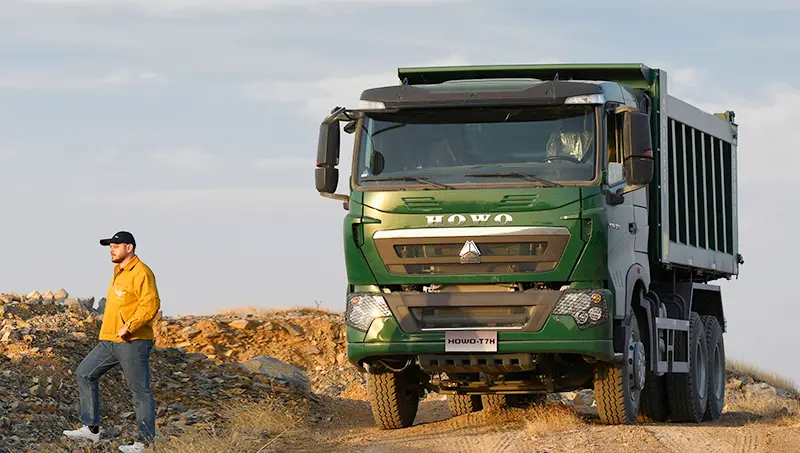
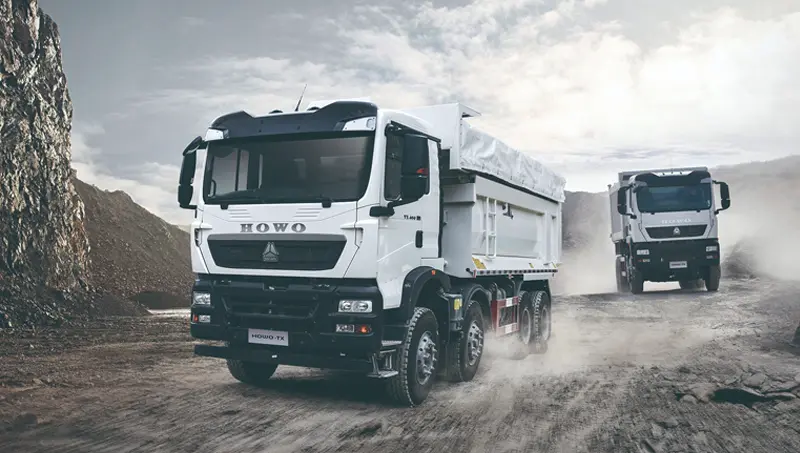
“This Howo Mining King is equipped with an L4-level autonomous driving system, enabling autonomous driving in closed environments such as sand and gravel aggregate mines, coal mines, and iron mines, where working conditions are harsh,” said Jiang Pengpeng. He added that this vehicle, with the support of radar, binocular cameras, and an onboard high-precision integrated navigation system, makes driverless operation in mining areas a reality, currently maintaining a zero-major accident record.
Behind this series of significant changes is a systemic transformation carefully planned by the government and proactively pursued by enterprises.
To optimize existing assets, in December 2024, the Shandong Provincial State-owned Assets Supervision and Administration Commission (SASAC) took the lead among provincial SASACs nationwide by issuing the “Implementation Opinions on Promoting the Accelerated Development of New Productive Forces in Provincial State-owned Enterprises.” This document outlined five aspects and 16 specific measures to encourage enterprises to leverage their traditional industrial layout, consolidate existing technological advantages, accelerate expansion into high-tech and high-value-added sectors, create well-known brands in niche markets, and accelerate the transformation and upgrading of traditional industries.
To promote incremental growth, the Shandong Provincial SASAC launched the “Cultivating New Enterprises Action Plan.” It issued the “Provincial State-owned Enterprises Cultivating New Enterprises Action Plan (Trial),” selecting strategic emerging enterprises and projects with good resources, great market potential, high technological maturity, and advanced technology. Precise support policies were formulated, and tiered cultivation was implemented to promote the clustering of innovative enterprises. Currently, more than 250 cultivation projects and enterprises have been included in the provincial SASAC’s key cultivation list.
With the combined efforts of enterprises and the government, by fully leveraging the leading role of technological innovation, deeply implementing the “number one project” of industrial economy, and accelerating the construction of a modern industrial system, Shandong is promoting the revitalization of traditional industries. The “15th Five-Year Plan” proposal explicitly states the need to “optimize and upgrade traditional industries.” For China, a country with a massive traditional industrial base, Shandong’s path of “rejuvenating old industries” offers valuable practical guidance. It eloquently demonstrates that transformation does not equate to “starting from scratch,” and the key to upgrading lies in empowering the old structure with new technologies, achieving a synergistic evolution of “optimization of existing assets” and “growth of new assets.” Based on its existing advantages in traditional industries, Shandong can also cultivate new, industry-leading productivity through high-end, intelligent, and green transformation.
04 “Diversified Operations for Greater Strength” or “Focusing Single-Mindedly on the Core Business”?
In many provinces, state-owned enterprises have faced the reality of overly scattered strategic layouts and a lack of focus on their core businesses. There was even a saying that “diversified operations are the only way to grow bigger and stronger.”
“All successful enterprises, to reach the pinnacle of their careers, rely on single-mindedly focusing on their core business.” In March 2018, General Secretary Xi Jinping, while participating in the deliberations of the Shandong delegation at the First Session of the 13th National People’s Congress, expressed high hopes for the reform and development of state-owned enterprises.
Shandong Province has deeply understood this requirement and launched a profound reform centered on “focusing on core responsibilities and main businesses.” Wei Jian, Deputy Director of the Planning and Development Department of the Shandong Provincial State-owned Assets Supervision and Administration Commission, explained that the number of core businesses for provincial state-owned enterprises is currently strictly controlled to between one and three. When determining core businesses, it is strictly prohibited to generalize or deviate from the core business; unrelated diversification and excessive extension of low-end industrial chains are strictly prohibited; and the relationship between core businesses and auxiliary businesses for production and operation must be strictly controlled.
How is this concept implemented? Driving along a Shandong expressway provides a direct experience.
Driving from downtown Jinan, it takes less than an hour to reach the Jinan East Service Area on the Qingyin Expressway. The parking lot here is supported by rows of “large umbrellas”—upon closer inspection, the concrete surfaces of these umbrellas are actually solar panels. A small open space at the service area entrance has even been converted into a convenience store specializing in imported goods.
“Jinan East Service Area is the first zero-carbon service area in China,” said Fang Jianguo, Deputy General Manager of Shandong Expressway Group. He explained that the renewable energy system within the service area generates over 10,000 kilowatt-hours of electricity daily. Besides meeting the service area’s electricity needs, any surplus can be stored or transmitted, achieving 100% green electricity self-sufficiency.
Building a photovoltaic power station in a service area might seem like a departure from its core business. However, these seemingly cross-sectoral initiatives precisely reflect Shandong’s profound understanding of focusing on its core responsibilities—not rigidly adhering to traditional operations, but rather making reasonable extensions based on its core business. Building a photovoltaic power station in the service area fully utilizes the idle space resources of the expressway and serves the green transformation of the transportation industry; opening an imported goods convenience store leverages the convenient conditions of Shandong Expressway’s coordinated operation of the Shandong-Europe freight train. These explorations are all closely centered around the core business of expressway operation.
Shandong Heavy Industry has also achieved unexpected success in adhering to its core responsibilities. “During the real estate boom of the past few years, we resolutely divested and sold off non-core businesses, including real estate, to focus on high-end equipment manufacturing. In 2024, we achieved a total profit of 28.1 billion yuan, significantly improving our profitability,” said Wang Guangyuan, director of the Policy Research Office of Shandong Heavy Industry. “If we hadn’t sold our real estate business then, we wouldn’t have made so much money now.”
“Guiding enterprises to rationally define their core business scope in this way helps them concentrate resources on their core business tracks, avoiding ‘involution’ competition from the outset,” said Wei Jian.
In addition to focusing on core businesses, Shandong has also optimized the layout of state-owned capital through restructuring and integration. Since 2018, more than 20 restructuring and integrations have been implemented around the “Ten Strong Industries” layout, forming two effective models: one is horizontal mergers of similar enterprises, such as the merger of the former Yankuang Group and the former Shandong Energy Group to form the new Shandong Energy Group, whose operating revenue in 2024 increased by 30.1% compared to before the restructuring; the other is industrial synergy restructuring, such as the Shandong Port Group established in 2019 by integrating coastal port resources, whose cargo throughput exceeded 1.8 billion tons in 2024, ranking first in the world. Xue Jie, Director of the Reform Department of the Shandong Provincial State-owned Assets Supervision and Administration Commission (SASAC), explained that the integration process adhered to the principle of “government guidance and market operation,” avoiding forced mergers and ensuring a truly unified approach where everyone is “one family, of one mind, working together, and destined to succeed.”
The specific reform measures are numerous, but ultimately aim to strengthen, optimize, and expand state-owned capital and state-owned enterprises. During the research trip to Shandong, a phrase frequently mentioned by enterprise leaders was, “The Provincial SASAC has performance requirements for us in this regard.” This detail perfectly captures the essence of Shandong’s experience.
Dong Xiaobo explained that Shandong has continuously optimized its high-quality development assessment mechanism, shifting the focus of assessments towards a comprehensive evaluation of enterprises’ core competitiveness, their industry standing, and their effectiveness in serving national strategies. Only by achieving excellence in core areas can irreplaceable competitiveness be formed; and any diversification must ultimately aim to consolidate and support the core business.
Shandong’s state-owned enterprises (SOEs) have clearly demonstrated through their actions that “focusing on core businesses” is the “essence,” the fundamental basis for their survival and development; while “prudent related diversification” is the “application,” a means to strengthen and optimize their core businesses. All development and expansion must ultimately serve the fundamental goal of enhancing the core competitiveness of their core businesses and improving the resilience of the national industrial chain. This principle provides important lessons for deepening SOE reform during the 15th Five-Year Plan period.
05 How Should the Government and the Market “Join Hands,” and When Should They “Let Go”? Currently, China’s economy is at a critical stage of transformation and upgrading, and a fundamental question urgently needs to be answered: how should the government and the market coexist? Shandong, a traditional industrial powerhouse, is exploring new paths through concrete actions.
Behind Shandong’s transformation practices stands a firm and powerful strategic driving force. The Provincial Party Committee and the Provincial Government attach great importance to the work of state-owned assets and enterprises. In the two years since taking office, Shandong Provincial Party Secretary Lin Wu has conducted more than 40 in-depth investigations of provincial enterprises, making systematic arrangements for Party building, management, governance, streamlining hierarchical structures, and addressing losses.
The core wisdom of this new path can be summarized in one sentence: When it’s time to “join hands,” take initiative and exert precise effort; when it’s time to “let go,” respect the rules and cultivate a healthy ecosystem.
When market gaps and high risks deter private enterprises, proactive government intervention becomes the primary driving force for innovation.
“Lu A02022F.” Three years later, Jiang Pengpeng can still readily recall this license plate number—it belongs to China’s first snow wax truck with completely independent intellectual property rights. Before the Beijing Winter Olympics, this high-end special equipment technology was long monopolized by foreign countries, leaving the domestic market completely blank. It was the nation, as the “first purchaser,” entrusting the Winter Olympics support task to China National Heavy Duty Truck Group (CNHTC), that spurred the company to overcome the extreme challenge of 79 patents.
“We were duty-bound to build the truck,” recalled design engineer Liu Xiping. From the variable beam tracking system to the ultra-low-profile saddle, from noise reduction technology to the lightweight chassis, this snow wax truck, embodying innovative wisdom, ultimately became a Winter Olympics sensation, just like “Bing Dwen Dwen.”
By acting as the “first purchaser,” the government not only ensured the smooth operation of major events but, more importantly, provided enterprises with valuable initial application scenarios, helping them achieve breakthroughs from scratch and ultimately forging internationally competitive star products, thus paving the way for innovation.
The core of this innovation model lies in the transformation of state-owned enterprises (SOEs). The government shifted from direct intervention to strategic guidance, supporting SOEs in undertaking strategic tasks to create and guide the market. In high-risk, long-cycle R&D fields such as chips and industrial machine tools, Shandong supported SOEs like Inspur and Shandong Energy in leading research efforts, demonstrating the strategic responsibility of a “proactive government.” Simultaneously, these enterprises were required to establish market mechanisms, participate in global competition, and adhere to the efficiency principle of an “effective market.”
This philosophy has fostered a group of dynamic business entities that, under the strategic guidance of the government, have demonstrated strong innovation capabilities.
“Of every 10 yuan of ETC transactions we generate, 8 yuan comes from outside the province. Relying on multi-scenario deployment and innovation in business models and systems, we have transformed from a regional ETC company into an industry leader,” said Wang Yu, Deputy General Manager of Shandong Expressway Xinlian Technology Co., Ltd., directly outlining their nationwide service footprint and explaining their development path. “With innovation as our core competitiveness, we have always stood at the forefront of industry transformation, defining a new paradigm for ETC services through a series of pioneering practices.”
He listed several of the company’s “firsts”: “We were the first in the country to achieve online ETC issuance, pioneered the development of diverse ‘ETC+’ application scenarios, and were among the first to establish a presence in the pre-installed ETC market.” Currently, Shandong Expressway’s ETC user base and annual transaction volume account for approximately one-seventh and one-quarter of the national total, respectively, and its pre-installed ETC market share exceeds half of the national market.
This spirit of innovation and change is deeply ingrained in the DNA of Shandong’s state-owned enterprises. Shandong Expressway has transformed its service areas into popular tourist attractions, offering services such as wedding ceremonies; Shandong Development Investment Group decisively invested in Huadian New Energy in the early stages of the new energy industry, reaping investment dividends; Shandong Port Group has successively established 54 inland ports across China and launched 106 sea-rail intermodal freight train routes, forging a path of market expansion that breaks geographical boundaries, moving from “waiting by the coast” to “venturing inland to find opportunities.”
Currently, the curtain has been raised on the 15th Five-Year Plan. How to better combine an effective market with a proactive government in practice has become a key issue in promoting high-quality development. Against this backdrop, Shandong’s transformation practice offers important insights: “Market-oriented mechanisms” are far more fundamental than “ownership.” The government’s “active role” is reflected in “building platforms, designing rules, allocating resources, and acting as the primary purchaser,” rather than replacing enterprise decision-making.
From the “long-termism” of reconstructing the logic of innovation to the “chain leader system” of reshaping industrial paradigms; from the pragmatic transformation of “new branches on old trees” to the strategic focus on “core responsibilities and main businesses,” and then to the innovative balance of the relationship between government and the market—Shandong’s practice is precisely a pioneering path of progress. It doesn’t chase fleeting bubbles, but rather takes root in the rich soil of 41 major industrial categories, consciously shouldering the responsibility, and exploring the most vibrant and resilient point of convergence between “effective government” and “efficient market.”
This path leads to people’s hearts. It leads to the pride of researchers receiving multi-million yuan awards, to the smiles of flower farmers whose annual income increases by 5,000 yuan from a single rose, and to the unwavering determination of entrepreneurs willing to “not make money for eight years” to secure a better future under clear expectations. Leading the way requires a clear sense of direction, but even more so, it relies on the cohesion of people’s hearts; shouldering the responsibility is a demonstration of ability, but even more so, it is a trust placed in them.
This path points to the future. It eloquently proves that Chinese-style modernization is not an ethereal blueprint, but rather is contained within vivid examples of those who dare to explore and put their ideas into practice.
© Sinotruk Howo Truck